A collision may leave you with pain, stiffness, weakness or difficulty performing movements that were normal before the accident. Physical therapy evaluates how the injury is affecting your mobility and function and, when appropriate, creates a progressive rehabilitation plan.
Accident injury rehabilitation
Physical therapy after a car accident in Arizona

Pain is only part of an injury. A crash can also affect how comfortably you turn your head, bend, lift, walk, work and move through everyday life. AZ Injury Doctors connects patients with injury-focused physical therapy providers across Arizona to help restore movement, strength and function.
Approximately 125 providers and 75+ communities served statewide, so we can help you find care close to home and coordinate additional specialists when your recovery needs more than physical therapy alone. Intake is answered 24/7.
25
Years treating injury cases in Arizona
125
Providers in the network
75+
Communities served across Arizona
40+
Law firms we work with
Rebuilding movement after an injury
Physical therapy focuses on what the accident changed.
After a collision, pain and stiffness can change the way you move. You may begin turning your entire body instead of your neck, avoiding one side when walking, struggling to lift, or limiting normal activity because a movement hurts.
Physical therapy evaluates those functional changes and develops an individualized rehabilitation plan based on your injury, symptoms and goals. Depending on your condition, treatment may include therapeutic exercise, mobility work, strengthening, balance or coordination training, hands-on techniques, patient education and a home exercise program.
The goal is not to put every accident patient through the same routine. It is to identify what movement or function has been affected, and progressively work toward restoring it safely.
Find physical therapy near you →
What physical therapy can address
Rehabilitation for common problems after a car accident
What therapy focuses on depends on your examination and on which movements the injury has made difficult. These are the problems accident patients most often bring to a physical therapist.
Whiplash and neck stiffness
A collision can leave the neck painful, stiff or difficult to turn. Physical therapy may focus on restoring comfortable movement, improving strength and gradually returning to normal activities when therapy is appropriate.
Back pain and limited movement
Lower, middle or upper back symptoms can make sitting, standing, bending and lifting difficult. Rehabilitation may address mobility, strength and movement patterns affected by the injury.
Shoulder injuries
Seat-belt restraint, bracing during impact or direct trauma may affect the shoulder. Therapy can focus on restoring range of motion, strength and functional use of the arm.
Hip, knee and lower-extremity injuries
Impact with the dashboard, vehicle interior or ground can affect the hips, knees, ankles and legs. Physical therapy may help restore walking tolerance, strength, balance and normal movement.
Muscle sprains and strains
Soft-tissue injuries can lead to pain, stiffness, weakness and guarded movement. A progressive rehabilitation plan can help rebuild mobility and function.
Reduced strength and endurance
Time away from normal activity after an injury may contribute to weakness or reduced tolerance for work and daily tasks. Therapy can gradually rebuild capacity based on your condition.
Balance, dizziness or coordination problems
Some patients experience balance or movement difficulties after an accident. Because these symptoms may involve concussion, vestibular or neurological conditions, the physical therapist may coordinate additional evaluation when indicated.
A functional approach to recovery
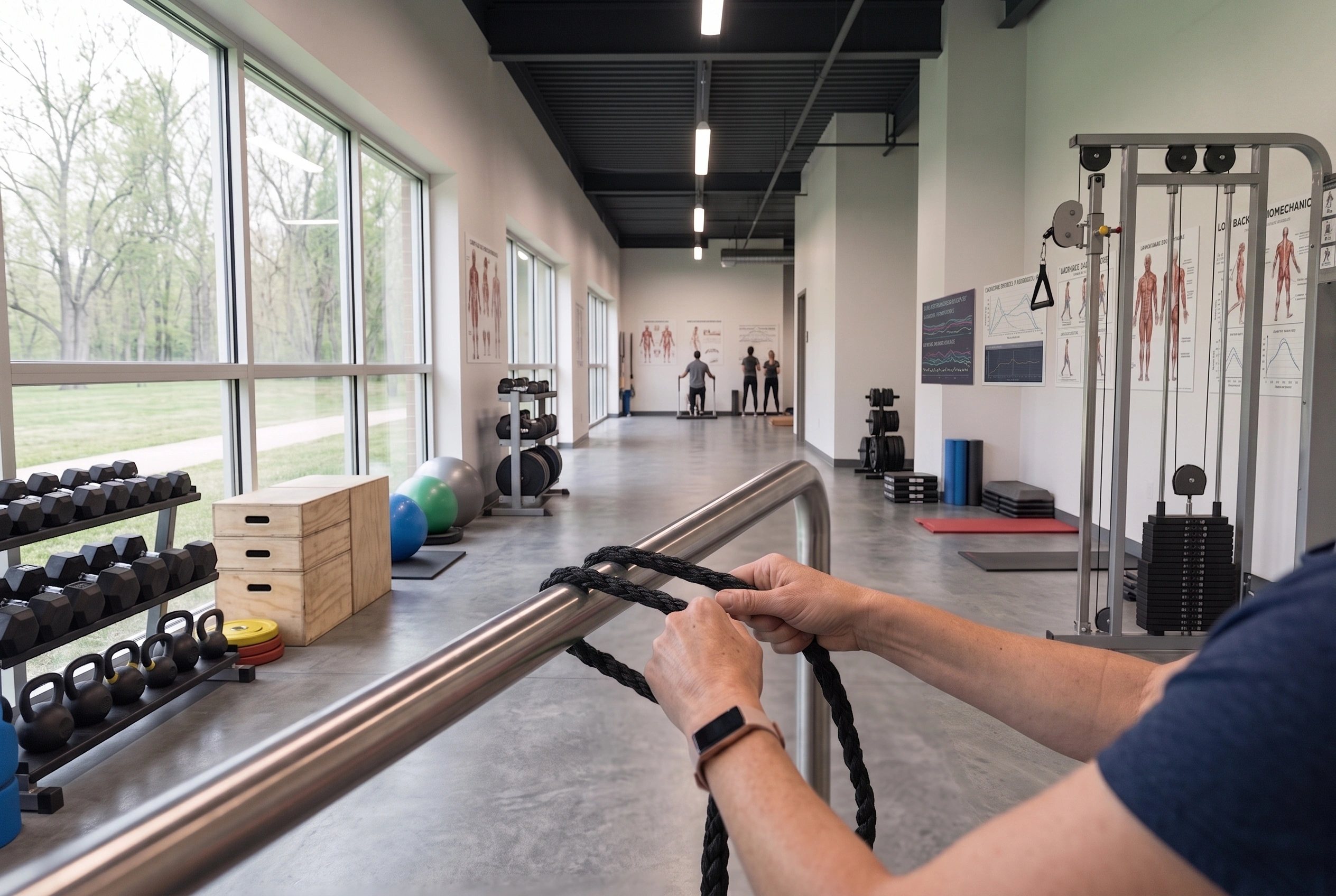
Move better. Rebuild strength. Return to everyday activity.
For an appropriate patient, accident-related physical therapy may focus on:
- Restoring range of motion
- Improving strength and stability
- Reducing movement-related pain and stiffness
- Improving balance and coordination
- Correcting compensatory movement patterns
- Increasing tolerance for sitting, standing, walking and lifting
- Rebuilding confidence with movement
- Supporting return to work and normal daily activity
- Teaching exercises patients can continue outside therapy
- Monitoring progress and adjusting rehabilitation over time
Physical therapy is individualized. Your treatment should be based on your examination and functional limitations rather than a preset number of visits or a standard accident protocol.
Your physical therapy evaluation
Your first visit starts with how the injury affects your movement.
01
Review the accident and your symptoms
Your physical therapist will ask how the injury occurred, when symptoms began, what makes them better or worse and which activities have become difficult.
02
Evaluate movement and function
Depending on your injury, the evaluation may include range of motion, strength, balance, walking, joint movement, posture and functional activities related to work or daily life.
03
Identify your rehabilitation priorities
The therapist considers both the clinical findings and what you need to return to — comfortably turning your head while driving, sitting through a workday, lifting, walking or completing normal household activities.
04
Build a progressive treatment plan
If physical therapy is appropriate, the provider develops a plan and adjusts it as your movement, strength and symptoms change.
Individualized rehabilitation
Your treatment plan is built around your findings.
Therapeutic exercise
Specific exercises may be used to restore mobility, improve strength and gradually increase tolerance for normal activity.
Manual therapy
Hands-on techniques may be incorporated when appropriate to address joint or soft-tissue mobility and support movement.
Mobility and range-of-motion training
Guided movement can help restore motion that became limited after an injury.
Strength and stability training
As symptoms and movement allow, rehabilitation may progressively strengthen the areas needed for everyday activity.
Balance and coordination training
When an injury affects balance or movement control, therapy may include exercises designed to improve stability and coordination.
Home exercise and education
Patients may receive exercises and movement guidance to continue between visits and support progress outside the clinic.
Part of a larger care plan
Some accident injuries need more than rehabilitation alone.
Physical therapy is one piece of the AZ Injury Doctors network. If your symptoms or examination indicate that another type of evaluation is needed, care can be coordinated rather than leaving you to find the next provider yourself.
Our network can help connect patients with chiropractic care, medical evaluation and pain management, neurology, concussion evaluation and therapy, orthopedic and surgical consultation, and trauma counseling.
Your care path is based on what your evaluation shows — not on forcing every accident injury into one type of treatment.
No physician referral required to start
Arizona allows direct access to physical therapy.
Arizona is an unrestricted direct-access state for physical therapy, meaning state law does not generally require a physician referral before a patient can be evaluated and treated by a licensed physical therapist.
One caveat: an insurance plan, personal injury claim or other payer may still have its own authorization or documentation requirements, separate from what state law asks for.
You do not need to sort through those questions alone. Contact AZ Injury Doctors and our coordination team can help determine the appropriate next step for your situation.
A statewide injury-care network
Rehabilitation close to home, with access to more care when you need it.
AZ Injury Doctors is not a single physical therapy office. We coordinate injury care through a growing statewide network, so patients can be connected with an appropriate provider in their area.
Approximately 125 providers
Our network includes injury-care providers across Arizona and continues to expand.
75+ communities served
We do not publicly list individual providers or exact office addresses. Tell us your city or area and we will help connect you with appropriate care nearby.
25 years of injury-case experience
The network is built around the needs of patients recovering from accidents and personal injuries in Arizona.
24/7 intake
Our coordination team accepts inquiries around the clock, responds within the hour and always the same day. Call or submit a request whenever you need help getting started.
Personal injury cases
Care coordination that can include your legal team.
AZ Injury Doctors currently works with more than 40 law firms across its injury-care network.
With your authorization, relevant records, treatment information and referrals can be coordinated with your attorney while your physical therapist and other healthcare providers remain focused on clinical care.
Medical providers determine treatment based on your health and clinical findings. Your attorney is responsible for legal advice and decisions related to your claim.
Physical therapy across Arizona
Looking for car accident rehabilitation near you?
You do not need to know which individual provider to call. Tell our team where you live, what happened and what type of symptoms or limitations you are experiencing. We will help identify an appropriate provider within the AZ Injury Doctors network near your area.
With 75+ communities served across Arizona, the network reaches places throughout the state. Physical therapy and other specialty availability varies by area.
Frequently asked questions
Physical therapy after a car accident
Take the next step
Get back to moving with confidence.
If an accident has made normal movement difficult, you do not need to figure out the rehabilitation process on your own.
Tell AZ Injury Doctors what happened and where you are located. We will help connect you with an injury-focused provider near you, and coordinate additional care if your recovery requires it. Intake is answered 24/7, across Arizona.